Saturday, July 26, 2008

Not quite the Dogs of the Dow

A recent article in the paper reminded me of the importance of dividends in outperforming the market. Many academic studies have shown that dividend-paying stocks outperform their non-paying brethren by leaps and bounds over time.

Further to that, I took a look at the current constituents of the Dow Jones Index, and the current yields available there, with the idea that, based on today's share prices, some of the companies are better situated to outperform the index over the next while. Here are the recent stock prices and the most recent dividends payable for each company (sorted by dividend yield):

Stock - Current Price - Dividend Yield (%)

Bank of America - $29.58 - 8.65%
Pfizer - $18.89 - 7.09%
Citigroup - $18.85 - 6.79%
AT&T - $31.40 - 5.48%
Verizon Comm. $34.45 - 4.99%
Merck - $32.68 - 4.65%
General Electric - $28.71 - 4.53%
Home Depot - $23.80 - 3.91%
JPMorgan Chase - $39.52 - 3.85%
Dupont - $43.81 - 3.74%
Chevron - $82.56 - 3.23%
American Int'l. Group $27.24 - 3.23%
Coca-Cola - $52.06 - 3.07%
3M - $70.95 - 2.90%
Johnson & Johnson - $69.03 - 2.72%
Boeing - $63.83 - 2.66%
McDonalds - $58.65 - 2.64%
Procter & Gamble - $64.46 - 2.64%
Intel - $22.01 - 2.61%
Caterpillar - $70.48 - 2.47%
United Technologies - $65.23 - 2.19%
Alcoa - $31.81 - 2.14%
American Express - $36.62 - 2.05%
ExxonMobil - $81.70 - 2.02%
Microsoft - $26.16 - 1.80%
Wal Mart - $56.83 - 1.74%
IBM - $128.53 - 1.63%
Disney - $31.10 - 1.25%
Hewlett Packard - $43.71 - 0.73%
General Motors - $11.90 - nil (dividend suspended)

These stocks have a median yield as represented by Johnson & Johnson/Boeing of 2.68% and a mean average yield of 3.25%.

What I am looking for here is stocks that seem to be mispriced in my favor - in other words, the dividend yield is higher than might be expected, while the prospects going forward over the intermediate term (5 years or so) for the company remain decent or better. Furthermore, I am looking for companies whose future is less likely to be impacted by higher inflation than average - typically, companies that have lower than average CAPEX requirements. Overall, this is an approach similar to a "Dogs of the Dow" strategy.

Leaving aside the prospects for the financial companies, who have an uncertain outlook - to say the least - over the next while, I like the following basket as likely to outperform:

Drug Companies:
Merck, Pfizer
Communications:
Verizon, AT&T
Consumer:
Coca-Cola, Johnson & Johnson, Proctor & Gamble
Other:
General Electric

These stocks have a median dividend yield of 4.59% and a mean average dividend yield of 4.40%.

While I like some of the companies prospects whose dividends lie in the bottom half, I think that their yield indicates that the market likes them a bit too much at present. If their dividend yield were to rise, the following companies might also interest me:

Hewlett-Packard, Disney, Wal-Mart, Microsoft, Intel, McDonalds (good news already priced in).

That's it - we'll check back on this basket at my annual review cycle, versus the Dow Jones Industrial Average ETF "DIA" which is currently priced at $113.17.

Disclosure: No positions held.


JW

The Confused Capitalist

Thursday, July 10, 2008

GE - Looks good to me


Just a quick post here before GE's earnings announcement. It's not often you get to buy a quality company with a 4.6% yield, based on the currrent $1.28 annual dividend payment and current price of $27.64. Nevertheless, GE has good prospects going forward.


Yes, there's some hiccups right now - if there weren't - the stock would be priced at >$45 with a sub 3% yield (like it has been for almost all of the past decade). You don't get to buy good solid companies at high yields very often. Stocks like these, with prices like this, are cornerstones of solid portfolio building.


Disclosure: no position.


JW

The Confused Capitalist

Tuesday, June 03, 2008

Insider Report on the Credit Crunch

I just recently read that foreclosures are starting to cause trouble beyond the confines of the subprime mortgages.

To investigate this phenomenon, your erstwhile blogger recently met a disguised banker in trench coat and dark glasses in a shady roadside diner. How, I asked, did all this happen, and what's the likely effect.

The banker whispered over to me ... "I can tell you, but I have to speak in code. Here, you can use this keyword code card afterwords to figure out the analogy I'm about to give you."

"Our money wizards assured our bank executives that this new lending would be like driving a new CAR, and that we'd be FASHIONable everywhere. We were even handed a nice clean MAP.

Unfortunately, it seemed like we ended up driving too fast, and a CRASH ensued. We looked around, and there was nothing but a WRECK left.

In the end, my friend, I don't want to tell you what our balance and income statements will look like, because I respect you too much to BORE you with all the details."

The banker glanced around, and quickly stole away. I was left scratching my head, until I remembered the keyword code card he'd handed me. I looked at it:

  • CAR = Careful Assessment of Realty
  • FASHION = Forward Appreciation Stereotyped High In Our Nation
  • MAP = Mortgage Applicants Poor
  • CRASH = Crisis Revolves Around Suspect Homeowners
  • WRECK = Wobbly Realty Eviscerating Capital Keepers
  • BORE = Bank Owns Real Estate
Now it all made sense ... reporting from the front lines of the credit crunch, I remain, yours truly, the Confused Capitalist.


JW

The Confused Capitalist

    Thursday, May 01, 2008

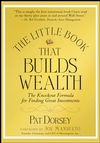
    Book Review - The Little Book That Builds Wealth

    The Little Book That Builds Wealth: The Knockout Formula for Finding Great Investments.

    I generally love short investment books. Too often, it seems to me, an author takes a couple of basic ideas - and rather than give concise, germane, explanations and examples - instead stretches the book out to be one or two hundred pages longer than necessary.

    Thankfully, that isn't the case here with this great little book.

    The author is Pat Dorsey who is the Director of Equity Research for investment research provider Morningstar. Mr. Dorsey takes Warren Buffett's popularized "economic moat" term and show you how you can analyze businesses to see whether they possess such an advantage.

    After screening for an above average return (both return on assets [ROA] and return on equity [ROE]), you can begin to consider whether your potential investment target has a long-term business advantage - an economic moat. Mr. Dorsey explains the four most common sources of moats: intangible assets, cost advantages, customer-switching costs, and network economics.

    In clear and concise language, he explains these moats and gives examples. Later chapters give you some valuation basics to ensure that you aren't acquiring your target at too high a price - something that is always deadly to superior investment returns. Finally, he also suggests when to sell an investment.

    I believe that this book deserves a place on any long-term investor's bookshelf, and highly recommend it. I would like to thank Mr. Peter Knox of Wiley for providing me with a review copy.

    Note: If you're on a blog aggregator, you can visit The Confused Capitalist here (or here: http://confusedcapitalist.blogspot.com/) for additional articles and exclusive content!


    JW

    The Confused Capitalist

    Sunday, April 27, 2008

    Playing an acknowledged theme - is outperformance possible?

    "It's tough to make predictions, especially about the future." - Yogi Berra

    Just like a trying to see a lighthouse on a foggy day, trying to clearly envision the future can be tough. However, making out the likely shape and dimensions of those things you are trying to avoid, or aim towards, will likely speed you safely on your journey.

    It's like that in investing too. Picking out the broad trends to aim for, or avoid, can help elevate your portfolio returns.

    Agricultural commodities are one big, broad, theme going forward. The popular press has recently jumped all over this, pointing to food unrest around the world. While the 'contra the herd" crowd would suggest that any trend reaching the front cover of your favorite pop magazine or newspaper is, most likely, nearly played out, they would probably be not so certain that this trend has.

    Examination of the underlying factors suggest that this trend is likely to continue for awhile. Here are the factors, as I see them:
    • Continued global population growth - check, this is still ongoing and unlikely to stop for several decades.
    • Continued use of food stocks for bio-fuels - check, this is still ongoing. In the US, about 30% of the corn crop is going towards bio-fuel, compared to around 10% in the early 1990's. Given the presidential candidates positions to date, and the strength of the lobbying industry in the US, this appears unlikely to diminish any time soon.
    • Diet - a meat-centric diet is a huge consumer of grains for animal feed (it takes anywhere from 5lbs to 18lbs of grain to produce one lbs of meat [depends primarily on meat type]). With a rising middle class in China and India turning away from a formerly mostly vegetarian diet, this will continue to pressure grains. Check, this factor remains in play.
    • Arable land is decreasing - decades of industrialization, and of water course management, have reduced the amount of quality arable land available. Growing desertification is also a factor too. Check, this factor remains in play.
    • Climate change - long known by scientists to be likely to reduce yield in several ways. Humanity continues to pump out voluminous greenhouse gases, suggesting this factor will only intensify in the future. Check, this remains a factor.

    Of course, against those trends, you have to consider the possibility of opposing trends occurring. I see those potentially as:

    • Potential reduction in bio-fuel use - a possibility, but with the opposition of vested interests, unlikely within a 10 year window.
    • Change in diet - again a possibility, the increasing cost of a meat-centric diet may reduce the volume of meat consumed in some areas,. Yet with this burgeoning middle class in so much of the world, it feels unlikely to occur without some support from government, and people's own conscience. Overall, it feels unlikely to occur much within a five year window.
    • Finally, the potential for increased production of foods, due to farmer's using more fertilizers and bringing all available land into production. This, I consider very likely. However, this may very well be offset by the declining yields associated with climate change.

    On balance, I'd say that the current trend isn't anywhere near played out, and that agriculture remains a major investment theme going forward. If you agree, then you may very well want to stuff your portfolio with agricultural-related investment products, something I believe will fuel investment returns for a very long period of time.

    Full disclosure: Long JJG, MOO, & COW (TSX exchange).


    JW

    The Confused Capitalist

    Sunday, February 17, 2008

    Agricultural, it's all about the diet ...

    Agricultural-related investments remains one of the big, visible, themes going forward over the next ten years. While there's been some mainstream acknowledgement of these major food issues going forward, for the most part, the media has been relatively quiet about the food inflation.

    Maybe that's because many countries focus on "core" inflation, which ignores volatile changes in energy and food. These, especially food pricing, are likely to continue to ramp upwards over the next five to ten years.

    Feeding the world continues to develop into one of the biggest stories of this century. The supply and demand curves for food, especially due to changing diets in the Far East to have more dairy and meat, continues to favour higher prices for these commodities. Other drivers of agricultural prices are:

    - Strong population growth, expected to reach 7 billion by 2013;

      - Rising income in developed markets and increased demand for soft commodities in developing markets;

      - Climate changes challenging agricultural production processes and product quality;

      - Arable land per person is decreasing;

      - Demand for agricultural products from Bio-energy (sustainable energy resources) market adds an important and competitive new demand source. Agricultural commodities are getting
      more and more important for energy generation.

      Note: If you're on a blog aggregator, you can visit The Confused Capitalist here (or here: http://confusedcapitalist.blogspot.com/) for additional articles and exclusive content!

      This is something I have written about here (provides some specific suggestions, which I continue to support) and here. I re-iterate those calls to make agriculture-related an important part of your portfolio. In Canada, you can now also consider a recent Claymore Investments ETF product, COW, which invests in agricultural companies.

      Despite recent run-ups in prices of companies serving the agricultural sector, and the underlying commodities themselves, I consider that this investment theme is still just early in the third inning of a ballgame; a ballgame that itself may even go into lengthy overtime.


      JW

      The Confused Capitalist

      Friday, February 15, 2008

      Happy Anniversary

      Just a little party for me ... to the tune of the Little River Band hit, "Happy Anniversary". This weekend is the anniversary of the start of this blog some two years ago.

      Chorus:
      Happy anniversary baby,
      Got you on my mind,
      Happy anniversary baby,
      Got you on my mind.


      Thanks to all my readers ... I've enjoyed the ride so far ...


      JW

      The Confused Capitalist

      Sunday, January 20, 2008

      Cleaning up behind "Easy Al" (Greenspan)

      If the economy was a ship, then Easy Al guided the world's largest economy within spitting distance of the shoals. Now, everybody else has to try and make sure that it doesn't crash into those shores, wrecking secondary havoc elsewhere.

      The Bank of Canada is widely expected to lower its interest rate at its next meeting on January 22, in response to the slowing US economy and liquidity issues. Because Canada's largest export market is softening, having our currency float through the roof would hurt many Ontario-based manufacturers who count on this market. So we too are in the position of having to lower our interest rates, even though this is against the other relatively strong fundamentals elsewhere in the country. This, undoubtedly, will cause trouble further down the road, as in the stagflation that money manager and financial columnist Avner Mandelmann says has begun to visit its plague on the US.

      While it's unfortunate that this will happen, viewed through the lens of alternative realities, which could include a depression, suffering through 10 years of stagflation seems infinitely better.

      For Canada, the picture is different. Public finances are on the soundest footing in a generation, and all attempts should be made to maintain that. Accepting that American troubles are real but different, we should not follow the same asset inflation mistakes made there, by allowing our credit to become too cheap. Policy-makers and central bankers must put their heads together to make humus out of manure, so that Canada can take advantage of this situation, and not blindly follow the Americans down the manure-laden stagflation trail.

      Perhaps first among these actions is lowering the cost of credit at a very slow pace, to a far lesser degree than that seen in the US. Secondly, as the cost of credit is lowered once again, perhaps accelerating our own national debt repayments would give us additional flexibility down the road.

      We experimented with stagflation in the 1970s - perhaps we can try experimenting with a strong currency for a change.

      Note: If you're on a blog aggregator, you can visit The Confused Capitalist here (or here: http://confusedcapitalist.blogspot.com/) for additional articles and exclusive content!


      JW

      The Confused Capitalist

      Friday, January 18, 2008

      7.1%? Are you kidding me!!?

      Picture: Kruschev (famous table pounder at the UN)

      Well, 2006 seemed like the year I pounded the table for emerging markets. If you'd listened to me - heck, if I'd taken my advice more seriously - my portfolio and yours would be turning into serious dough by now.

      I have a feeling that this year I'll be pounding the table about the banks.

      Less than two weeks ago, I wrote about an eight stock portfolio containing three banks - stocks that Warren Buffett had recently added to his position in. Since then, two of the three stocks have fallen in price and the dividend yield has correspondingly increased. These three stocks, recent prices and yields are:

      Wells Fargo (Bank) - WFC -$26 - 4.8% dividend yield

      US Bancorp (Bank) - USB - $30 - 5.6% dividend yield

      Bank of America (Bank) - BAC - $36 - 7.1% dividend yield

      I can get a 7.1% yield on a bank stock - the largest bank in America by market capitalization -that's just announced a buyout of a troubled financial institution. 7.1%? Are you kidding me!? I say these banks offer fantastic value at these prices.

      Do you really think the banking team would have even considered this buyout if they thought there was any potential they'd have to cut the dividend? Because that's what a 7.1% dividend for a major business institution implies: that a dividend cut, a la Citigroup, is in the works.

      Unlike Citigroup, however, Bank of America is still buying. Does that sound like a troubled institution to you? 7.1%? You must be kidding.

      Note: If you're on a blog aggregator, you can visit The Confused Capitalist here (or here: http://confusedcapitalist.blogspot.com/) for additional articles and exclusive content!

      By comparison, the ETF "SPY" (S&P500) was trading at $132, and a 2.1% yield.


      JW

      The Confused Capitalist

      Credit Crunch: Canadian Banks On Sale

      Pictured: A different kind of crunch.

      The global credit crunch seems to be affecting a lot of bank share prices, including many Canadian banks who have relatively little exposure to the sub-prime slime (CIBC excepted).

      One analyst recently pointed out that 10 year Government of Canada bonds were yielding around 3.8%, and that the average weighted dividend yield of the six big banks was around 4.5%. The analyst pointed out that this was as large a spread as he could ever recall.

      I too think that the banks offer tremendous value at current prices and yields. I look at it this way, if the credit crunch turns really bad, it's not just the banks that will suffer. There will really be no hiding out anywhere if things turn nasty. Having said that, I don't expect it, and therefore suggest that the current environment is great for buying banks stocks.

      Of the Canadian ones, I like four of the six that have avoided most of the sub-prime problems and have dividend payout ratios around 40%.

      These include the Royal Bank ($47, DivYield 4.2%, 42% Payout Ratio); my personal favourite, the Bank of Nova Scotia ($45, 4.1%, 40%); the TD ($64, 3.6%, 36%); and, to a lessor extent, the National Bank ($47, 5.3%, 39%). I think that buying a basket of these shares now, will look very good in two to five years. Odds are that the dividends will have been raised nicely over the period, and the shares are quite likely to have been repriced higher as well.

      By comparison, the XIU ETF (broad Canadian market) is trading at $74 with a 2.1% dividend yield.

      Note: If you're on a blog aggregator, you can visit The Confused Capitalist here (or here: http://confusedcapitalist.blogspot.com/) for additional articles and exclusive content!


      JW

      The Confused Capitalist

      Tuesday, January 15, 2008

      Sub-Prime Slime Dirties CIBC

      One of Canada's five big banks, CIBC, announced on Monday that it would be re-capitalizing its balance sheet with the sale of $2.75 billion in new equity. The bank, which has a penchant for poking itself with a sharp stick every two to three years, has already written off $3.5 billion in sub-prime exposure, which handily exceeds the $2.5 billion write-offs from the Enron fiasco.

      The shares will sell at a headline price to the main investor group at $65.26 for the well-heeled billionaire, pension funds, and life-insurers who'll soak up about half the issue, and $67.05 for the great unwashed masses. After an additional 4% commitment fee is further soaked up by the main investor group, this reduces the actual price to $62.65 off of the $65.26 headline price, which is a steep reduction from the $72 level which the shares were trading at prior to this announcement.

      Reaction from analysts has been widely positive, who generally point out that it's better to go to the equity well once, and dip heavily and deeply in case of further trouble. Most analysts appear to think that a good portion of the new equity won't be entirely needed for further write-downs.

      Canada's best business writer, Derek DeCloet, thinks however, that the remainder of the new equity will be useful as all banks head back to their core roots - making loans with their own capital, as investors continue to shun repackaged loans of all sorts.

      CIBC shares have been trashed by the market over the sub-prime mess; the further $2 drop to $70 since the equity infusion announcement means that their shares have now lost some 35% since achieving their 12 month high in May 07.

      While conservative CEO Gerry McCaughey has, in my opinion, done a good job since his appointment, one can only wonder what stick CIBC will pick up and play with next year.

      Saturday, January 12, 2008

      Would Morningstar like this portfolio?

      Recently, I profiled a portfolio that looks like it could do well to help fund a financially secure retirement, based on borrowing against your home, and using dividends to make the payment.

      Today I joined Morningstar, and looked up the rankings for all of those stocks. Some of their key rankings involve their assessment of overall business risk, the moat of the company, the overall rating (out of five stars), and their estimate of fair value. Now, due to their business model, I consider Morningstar ratings to be of higher quality than that churned out by the average investment house.

      Of the eight stocks in the portfolio, only three of them have an overall "three star" (average) rating (Progress, Reynolds and Verizon), with GE having a four, and the rest at five stars. This suggests an above-average portfolio, overall.

      The average ratio of current stock price to their indicated fair value is just 80%, with only Verizon over 100% (109%), and all the rest are at 92% or below. This suggests that, as a group, there is room for significant capital growth going forward. The best buy of the group on this ranking is Bank of America, which they estimate is trading at just 55% of their fair value estimate.

      All of the businesses exhibit "average" business risk, except for Reynolds (above average) and US Bancorp (below average).

      Five of the businesses are defined as having a "wide" moat, while the same three stocks that got an overall three star (average) rating had their moat defined as "narrow". According to information Morningstar publishes, only about 10% of their coverage universe achieves a "wide moat" definition, with about 45% achieving the next highest "narrow moat" ranking, and the balance defined as "no moat". This suggests that this portfolio is far more secure than average in this criteria.

      In summary, I'd say that the portfolio is above-average quality in three of these four important categories, while still no lower than average in any category (average in overall business risk).

      Note: If you're on a blog aggregator, you can visit The Confused Capitalist here (or here: http://confusedcapitalist.blogspot.com/) for additional articles and exclusive content!


      JW

      The Confused Capitalist

      Wednesday, January 09, 2008

      Buying a Dividend Machine


      Photograph: Cash-Flow Machine.

      It's easy to say, but often tough to do: buy something popular, before it's popular. As Yogi Berra was once reputed to have said, "It's easy to make money in stocks; just figure out which ones aren't going to go up, and don't buy them"

      However, research has repeatedly shown that buying stocks that return money to shareholders, through dividends and/or share buybacks, consistently outperform the market, usually by a wide margin (2% or more).

      The best buys however, are usually those whose cash returns to shareholders are just beginning to turn upwards, and those that operate in a protected or oligopolistic environment.

      Cable and cell companies fit the bill in terms of limited competitors, and two stocks whose fortunes appear to be ascendancy are Rogers Communications, and Shaw Communications.

      Both trade both in Canada on the TSX (RCI.B and SJR.B) and also on the US exchanges (RCI and SJR) respectively.

      After a several decades of infrastructure build-out and crushing debt, Rogers is emerging as a cash-flow machine. According to a survey of analysts, as reported here, Rogers is predicted to increase dividends from $1.00 annually to $1.60 later this year, to $2.40 is 2009 and $3.20 in 2010. Morningstar provides some further information, here (note, however, that the dividend information is out of date, as it has been recently raised).

      What is also interesting here, is that if the consensus dividend projections are correct, it suggests that the stock may well also be revalued significantly higher by 2010. Compared to its recent price at around $41 (Canadian) with a 2.4% dividend yield, very few quality stocks in Canada yield much over 4.5%. Assuming that the $3.20 in dividends by 2010 is correct, this suggests that the stock may well be valued by the market in the low $70 range at that time, with the distinct possibility of something higher.

      Similarly , according to a story here, Shaw Communications, a cable and telephone provider expects to be able to continue churning out the dividend increases. Morningstar provides some further information, here (note, however, that the dividend information is out of date, as it has been recently raised). Shaw's recent price of $23 (Canadian) is producing a 3.2% yield, and it also appears that there may be room for significant upward appreciation of the stock price if the dividends keep getting raised.

      In another story, Shaw was picked by analyst Peter Gibson at Desjardins Securities in his outperforming focus portfolio, as one of eight Canadian stocks with the potential to outperform the market. He also picked Rogers in that same portfolio.

      Note: If you're on a blog aggregator, you can visit The Confused Capitalist here (or here: http://confusedcapitalist.blogspot.com/) for additional articles and exclusive content!

      I expect both of these stocks to outperform the broader market over the next five years, and the current dividends (and expectation of future increases) make that prospect just the more tantalizing.


      JW

      The Confused Capitalist

      EFT Benchmark: Broad Canadian Market "XIU" (on the TSX) - $80.40 (Canadian)

      Tuesday, January 08, 2008

      Make dividends work for your retirement

      If you are going to buy stocks on credit, via a home mortgage loan, now is an excellent time to consider doing so. Bankrate.com currently shows the average national 15 year fixed at 5.08% and 30 year at 5.56%. Here's how to make those fantastic rates work for you.

      Let's say that you and your wife have poor retirement prospects (never saved any money) and are both now 50. By purchasing strong dividend- paying stocks, you can actually build a substantial positive cash-flow by retirement.

      By screening for large-cap stocks, with strong dividend history, we can assemble a moderately diversified portfolio, with strong dividend history. Here's a selection of eight large-cap S&P500 stocks with a five year history of increasing their dividend over time - by an average of 8.5% annually. (Name - Industry - Stock Symbol - Recent Price - Dividend Yield)


      1. Wells Fargo (Bank) - WFC -$27.68 - 4.35%


      2. US Bancorp (Bank) - USB - $29.71 - 5.61%


      3. Bank of America (Bank) - BAC - $39.90 - 6.35%


      4. Pfizer (Pharmaceuticals) - PFE - $23.23 - 5.52%


      5. Progress Energy - (Utilities) - PGN - $48.37 - 5.19%


      6. Reynolds American (Tobacco Conglomerate) - RAI - $67.37 - 5.17%


      7. Verizon (Communications) - VZ - $43.35 - 3.96%


      8. General Electric (Industrial Conglomerate) - GE - $36.04 - 3.44%

      These stocks, if bought in equal amounts, would currently produce an overall dividend yield of 4.95%.

      If, for example, $20,000 of each stock was purchased, then a mortgage of $160,000 would have to be taken out. Using a 30 year fixed rate schedule, the monthly payment (5.56% rate) would be $914. Against that, the first year, you would receive dividend payments of $660 monthly; a modest shortfall of $255 monthly. However, even that shortfall would likely be in name only, since the interest (roughly $740 per month during the first year) can be written off on your taxes.

      Assuming the dividends continue to grow by an average of 5% annually (against the actual average five year growth of 8.5% annually), by year five the dividend income ($843 monthly) would nearly match the actual payments, before the interest write-off.

      Under the same assumption, by retirement at 65, a dividend income of $1372 per month would be produced, and by the time the mortgage is paid off in 30 years, $2852. If the dividend income grows at the same pace it has over the past five years, then you'd have to revised those two prior figures significantly upwards, to $2243 and $7628 per month, respectively. Sure eases the worry of being on a "fixed income" later in life!

      Note: If you're on a blog aggregator, you can visit The Confused Capitalist here (or here:
      http://confusedcapitalist.blogspot.com/) for additional articles and exclusive content!

      As a final plus, if the stock value also grew at an average of 5% per year, then the value of that portfolio in 15 years would be $332,628 and $691,510 in 30 years.

      Lest anyone think that three of these stocks - the bank stocks - are too risky - be advised that billionaire genius investor Warren Buffett has recently added to his stash in these three stocks. And uncle Warren isn't noted for buying into distressed companies.

      By the way, there's also a ton of academic research showing that dividend-paying stocks produce a better rate of return over time, and are less volatile than non-dividend-paying stocks.
      Right now, funding a healthy retirement is easier than you might think.


      JW

      The Confused Capitalist

      Tuesday, January 01, 2008

      Report Card - Predictions in Review

      This is the time of year when many financial columnists and bloggers review their picks, predictions and suggestions made during the past 12 months.

      I'm not going to do that, since this blog specifically makes the point that investing is a longer-term process, and picking your winners and losers an average of just six months later is foolish and leads to thinking which doesn't improve your long-term results.

      What I am going to do is review the 2006 predictions and suggestions I made, providing a better longer-term outlook.

      This blog started in February 2006, and on Feb 19th I looked at a portfolio heavy in dividend companies, with the hope that the dividend growth over about 5 years or so, would then pay enough in dividends to make a theoretical mortgage payment used to buy those securities with. Based on history, I was looking for a 10% annual portfolio growth, with about 5% of that coming from dividends, and 5% from capital growth.

      Overall, the portfolio is up 12%, plus the dividend yield of about 5% annually, which is producing a return pretty much bang on. The dividends have also grown, from 4.75% annually of the initial portfolio value, to 5.08% annually now. Call that a win overall.

      Incidentally, with long-term mortgage rates now in the 5.3% (15yrs) to 5.8% (30yrs) range, now is an excellent time to revisit that same strategy, although I expect the portfolio might well get stuffed today with many more financial firms, given some of their perceived difficulties and consequent high yields. Read the entire Leverage Series.

      Emerging markets was a popular theme for me, calling them good value in March/06, May/06 and October/06. Buying the most-popular emerging markets ETF, "EEM", you'd be up anywhere from 45% to 55% depending upon your entry point. The S&P 500 moved up only 10-15% over that same period. Call that a clear victory.

      I also suggested in March/06 that uranium producers had a long tailwind in their industry, given decades of under-mining the resource and shortages to come. The world's largest single uranium producer, Cameco ("CCJ") moved up by just 5% since then, against a 14% increase in the S&P500. However, since then, Cameco has also been plagued with production problems, which has likely impaired its stock price. Still, call this a loss.

      In early March/06, I also warned that I felt the US currency would continue its descent, and later re-iterated this call in April. Since the initial call, the US dollar has lost 18% when measured against its largest competitor currency, the Euro. Call this a win.

      Also in March, when many were suggesting that Berkshire's Warren Buffett had his better days behind him, I suggested it would be too early to count an extraordinary investor like him out. Since then, Berkshire shares have risen by 63%, rising from $87,400 to $142,200. Call this a win.

      In mid-March, I felt that the oil-boom in Alberta Canada, was going to continue to positively impact their real estate sector, and suggested three companies who would likely be prime beneficiaries. Since then, these stocks have risen by an average of 42%, against Canada major stock index, the S&P/TSX60 (represented by the ETF "XIU" on the TSX) which has risen by 20% since then. Call this another win.

      In late March, I suggested that inflation was on the upswing (a win), and that as a result of this, US homeowners would be wise to lock-in their variable rate mortgages (ARMs) to 15 or 30 year fixed rates, as rates will be higher in 2-3 years, and much higher in 5-7 years. While the jury is technically still out, long-term fixed mortgages were in the 6.25% range then. The freeze-up in the credit markets has resulted in the Fed dropping its rates, and 15-30 year fixed mortgages are now in the 5.3% (15 yrs) to 5.8% (30yrs) today. Call this a loss.

      In April/06, I suggested that constructing a simple, sensible, long-term portfolio was as simple as "1,2,3 - A,B,C". That portfolio used just six ETFs, tracking both domestic and international markets. The portfolio gave consideration to value type investments, as well as growth through a 25% holding in emerging markets. It was also much more balanced internationally than most investors holdings, with 60% of its holdings outside of the US market. This portfolio has returned 22%, against an 11% increase in the ETF "SPY" (which tracks the S&P 500). Call this a clear win.

      In April, I also suggested that the US market had reached its peak for quite a while to come - since then the S&P 500 has risen by 14%. Call this a clear loss.

      In April/06 I also said that Canada's Ontario land-title provider Teranet (TF.UN), would likely jump upon its IPO issue to reflect a lower yield. While that did happen, it also fell subsequently on some poor results. Call that one a draw.

      Looking back now, it seems like an easy call to say that the US residential real estate was going to get trashed, but then, not so many were certain of that. I made calls on this sector in March/06 saying it was too hot and re-iterated that again in June/06. In July/06, I twice advised against investing in home-builders or related stocks, warning that "it won't be pretty out there in two to four years". This warning came despite some sensible bloggers, notably Geoff Gannon and Bill of No-Do-Das, suggesting they looked like good long-term investments. Depending on which point you use, the home-builders ETF "XHB" has fallen by as much as 55% since then. Call this a can of "whupp ass" victory.

      In September/06, I suggested another simple ETF portfolio, this time for Canadian investors, using just four ETFs. This one would have half of the portfolio invested outside of Canada, with the balance in the country. That portfolio is up 37% on a local (Canadian) currency basis, compared to a 22% improvement in the country's major index (S&P/TSX60). Call this another clear win.

      Finally, in November/06, I suggested an investment in the leveraged split shares of LSC and ALB (trading on Canada's TSX) exchange representing several Canadian insurers and banks respectively, looked like good value. Since then then have fallen by an average of 2%, against the S&P/TSX60 increase of 13%. Call this a clear loss.


      Well, that's about it - the way I read this is that I got almost all the major calls right - that is, the portfolio suggestions, the ETF builders (e.g. emerging markets, etc.), currency calls, and the real estate meltdown. And while I was right on the inflation rate indications (upward), I didn't anticipate the Fed dropping rates due to the credit market freeze up. And I also missed on a few individual stock predictions. However, I would say that my biggest miss was calling a US market high in April 2006. Overall, though, I'm pleased with how the suggestions have turned out.

      I hope that my 2007 predictions and suggestions look as good in 2009 as these ones generally have.

      PS (Jan 6/08): I now also recall a 2006 year end survey by Birinyi Associates who run the Blogger Sentiment Poll, asking which S&P500 stock did I think had the potential for the greatest increase over the year. I selected Coke, "KO", which closed on the trading last day of 2006 at $48.25 and the last day of 2007 at $61.37, for a 27.2% increase. By comparison, the ETF "SPY" (representing the S&P500) gained just 3.2% over the same period. Call that also a clear win.

      Note: If you're on a blog aggregator, you can visit The Confused Capitalist here (or here: http://confusedcapitalist.blogspot.com/) for additional articles and exclusive content!


      JW

      The Confused Capitalist

      Wednesday, December 19, 2007

      Credit Markets for Dummies / Bankers

      Last week, I was complaining about the idiocy of the CEO's of the major banks in their sub-prime and general end-of-cycle lending practices. Although I thought that these folks should be smart enough to understand cyclical risk in mortgage lending, apparently it has escaped them.

      While your servant is just a humble real-estate appraiser in his real life (and a former branch manager for Household Finance), I didn't think understanding changes in real estate values or basic credit lending (and hence, value at risk for a bank) was too complicated.

      Apparently, though, I was mistaken. Hence, my new class, Credit Markets and Residential Real Estate Values 101. Now, I want the heads of Citibank, Bank of America, et.al. to stop goofing off, and sit at the front desks here.

      Prince! Up Front!! What? You've been canned? (oops, "resigned under pressure") Well, all the more reason to sit up front here. Now pay attention!

      This is pretty simple.


      1. First of all - don't lend to people who can't afford to repay you - yes, over the long term - not just based on the teaser rates!

      2. Check their references - i.e. confirm their income, debts, payments, etc.

      3. Medium-to-longer term changes in real estate values (which is really what the bank's security is predicated upon) is based almost completely on just three factors. Pay attention to those factors, since they can affect values!

      The three factors affecting the medium-term plus value of real estate are:

      a. Changes in population in an area;

      b. Changes in after-tax income;

      c. Changes in interest rates.

      Prince, note that unsustainable changes or trends (as an example, interest rates at historic or near historic lows, eg 2001-2005) will have the effect of exagerating short-term property values. Meaning, in the context of real estate values, circa 2002-2007, they are likely to become OVERSTATED due to "c" above. And thus impair balance sheets.

      Note: If you're on a blog aggregator, you can visit The Confused Capitalist here (or here: http://confusedcapitalist.blogspot.com/) for additional articles and exclusive content!

      No one could have predicted this? I pull some narrative commentary from my own appraisals dealing with values in 2003 ...

      "... the local housing market continues to set records, fuelled by both low interest rates, and a relative shortage of product."

      ... in 2004 ...

      "Lending rates remain at near-historic lows, and continue to support economic activity of all kinds, but low rates are well-known to provide significant boosts in pricing and activity in the housing sector."

      ... and in 2006 ...

      "Lending rates remain at near-historic lows, and continue to support economic activity of all kinds, but low rates are well-known to provide significant boosts in pricing and activity in the real estate sector."

      Prince, Prince!! Pay attention.


      JW

      The Confused Capitalist

      Saturday, December 15, 2007

      Dancing Hippos - Inflation and Subprime Cleanup

      The "unforeseeable" crash in the sub-prime market has resulted in central banks around the world both lowering their lending rates, and to agreeing to co-ordinated activity to ensure the credit markets don't freeze up again.

      Unfortunately, while necessary, this has all the hallmarks of weening the alcoholic off the juice, by just letting them have a little bit more to limit the potential for the D.T.s

      I still don't understand how most of these large banks got caught up in the lending to extreme value-to-loan ratios that characterizes the end of many mortgage lending cycles. Were ALL the CEO's drunk? Can they not figure out what lending at low rates for long periods of time does for real estate prices? Do they not read? Are they completely ignorant of both Econ 101 and history? Can they not predict a cause and effect scenario for real estate values? Are they stupid? Unable to think for themselves?

      Keeping Fed Rates at 2% or below, as was done from Nov 6, 2001 to Dec 14, 2004 for over three years, is unprecedented in the past fifty years. In the late 1950's and early 1960's, there were three periods where the Fed Rate was 2% or under, but none of these periods exceeded 9 months in duration. (See for yourself).

      A simple scaling-back of loan-to-value ratios as rates began to rise - and in response to the booming real estate price increases - would have both protected the banks capital and balance sheet and, as a group, protected society from this mess. Instead, we're all destined to pay for this fiasco, surely through higher inflation rates, if not in other ways.

      Note: If you're on a blog aggregator, you can visit The Confused Capitalist here (or here: http://confusedcapitalist.blogspot.com/) for additional articles and exclusive content!

      Ultimately, the unwinding of the party of these drunken sailors will have implications on nascent inflation, something that'll probably take even longer to unwind than the couple of years the credit market will be in the sick bed for. One of these two "dancing hippos" may well cause further damage as they twirl about the room with abandon.

      Aside from Greenspan, there are many others implicit in this whole mess, including a lot of people who should know better. Maybe Citigroup et. al. needs to open its own form of McDonalds "Hamburger University". Credit Markets 101.

      Merry Christmas - bah humbug!


      JW

      The Confused Capitalist

      Saturday, December 08, 2007

      Betcha a $Billion or two ... Warren Buffett buys more bank stock

      Filings covering the period ending September 30 2007 showed that Berkshire Hathaway added to stakes in three large U.S. banks with increased stakes in Wells Fargo & Co (NYSE:WFC), U.S. Bancorp (NYSE:USB) and Bank of America Corp (NYSE:BAC).

      Between then and now, prices in two of those three banks fell by around 10% at one point or another, while stock in US Bancorp was available at around the same price as its lowest price in the quarter ending Spetember 30th.

      Given Mr. Buffett's well-known penchant for buying discounted, out-of-favour stocks, do you think his next filing will show he added to those positions with his ~$40 Billion cash hoard?

      Betcha a billion or two he did.

      Note: If you're on a blog aggregator, you can visit The Confused Capitalist here (or here: http://confusedcapitalist.blogspot.com/) for additional articles and exclusive content!


      JW

      The Confused Capitalist

      Sunday, November 25, 2007

      Sectors Still Look Poised for Outperformance

      Back in August, right near the bottom of the mini-plunge, I suggested several sectors whose stocks looked poised for outperformance over the longer term, as well as a couple of groups to avoid.

      The groups I liked included some of the bigger banks (although I warned that further declines of 10-20% also looked possible), whose yields were then in the 3.4% to 5.0% range or so.

      They also included some of the large engineering firms, who I see as prime beneficiaries of the design and oversight work needed to build out the emerging markets infrastructure, and the work needed to replace the aging infrastructure of the western world.

      It also included several emerging markets suggestions, and a later posting suggested that distressed credit buyers would have the opportunity to load up their balance sheets with cheap debt, which could fuel earnings for years to come.

      Since those predictions, the S&P 500 has bounced up and then down, and is essentially flat over that period.

      Note: If you're on a blog aggregator, you can visit The Confused Capitalist here (or here: http://confusedcapitalist.blogspot.com/) for additional articles and exclusive content!

      The banks mentioned have generally declined, most by about 10-20%, but with Citigroup getting trashed. On the other hand, some have held up pretty well, considering the magnitude of write-offs announced since then. I still like them, and now most of the yields are now in the 5-7% range, making them even more attractive in the face of what I see as a weak market. Maybe it's just me and Warren Buffett who like the bank stocks at these prices.

      Engineering firms still look good as a look term-prospect, but this may be somewhat tempered by the fact that most of those discussed have moved sharply upwards, by 10-50% since then.

      The emerging markets suggestions have also moved up, by about 15-20% on average of the group discussed.

      Finally, a later August 2007 suggestion of looking at some distressed credit buyers is essentially flat as a group.

      I still like all of these groups, and think that current prices are likely to look good several years from now.


      JW

      The Confused Capitalist

      Sunday, November 04, 2007

      Food Inflation will continue and accelerate

      I have written several times about my belief in a movement towards higher food prices in the future, perhaps much higher than in the past. Some commodity experts like the renowned Jim Rogers have stated this belief too.
      While I normally enjoy helping investors think about long-term trends that'll help fatten their portfolios, because of the implication this trend has for people everywhere, especially poor people, this posting gives me absolutely no joy.

      Nevertheless, here's several ways to invest in what I believe is a long-term trend towards higher food prices:

      Van Eck Global's fifth ETF, Market Vectors Agribusiness (AMEX:MOO), which recently debuted and is already up nearly 20% since then. The ETF includes subsectors of the agriculture, such as agricultural chemicals at 34.3% of the index, agriproduct operations, 33.5%, agricultural equipment, 24.3%, livestock operations, 5.6%, and ethanol/biodiesel, 2.3%.

      The 40 companies from 13 countries in the index must have a market cap of at least $150 million and a monthly trading volume of 250,000 shares. These companies are primarily engaged in the business of agriculture, and must derive at least 50% of their total revenues from agribusiness. According to information on the fund sponors site (Van Eck), as of Sept 2007, the fund had a PE of ~27, a PB of ~3.5, and a dividend yield of 1.06%.

      There are also several ways to invest more directly in the foodstuffs, either through ETFs or ETNs. Two recent products from Barclays (ipathetn) are as follows:

      "JJA" tracks the Dow Jones–AIG Agriculture Total Return Sub-Index. The Index is currently composed of seven futures contracts on agricultural commodities traded on U.S. exchanges. The weightings are currently as follows: Coffee 8.0%; Sugar 7.0%; Soybeans 28.0%; Wheat 23.6%; Soybean Oil 9.9%; Cotton 9.3%; Corn 14.3%. According to the information provided by the sponsor, the annual return from the index looks like this: 1yr = 44%; 3yr = 12%; 5 yrs = 6.2%; 10 yrs = -(minus)1.7%.

      As you can see, owning the index constituents would have been very good during the past year, and very lousy over the past 10 years.

      "JJG" tracks the Dow Jones–AIG Grains Total Return Sub-Index, which has an underlying composition of three futures contracts on grains traded on U.S. exchanges. They are weighted as follows: Soybeans 42.6%; Corn 21.6%; Wheat 35.8%. According to the information provided by the sponsor, the annual return from the index looks like this: 1yr = 64%; 3yr = 14.9%; 5 yr = 6.4%; 10yr = -(minus)1.4%.

      Judging by the return differences between the two products over the past year, it appears that the Grains component of the "JJA" ETN (which is 66% of that ETN) has provided almost all of the 44% annual return; in fact, my calculation shows that it's responsible for 41 points of the 44% return.

      PowerShares also offers a foodstuff type ETN, DB Agriculture; "DBA".

      It tracks the Deutsche Bank Liquid Commodity Index - Optimum Yield Agriculture Excess Return. The index is a rules-based index composed of futures contracts on some of the most liquid and widely traded agricultural commodities – corn, wheat, soy beans and sugar, in equal weightings (i.e. 25% each). However, the weightings in the fund are only periodically rebalanced, and as of October 25 2007, the weightings had changed to as low as 17% for sugar and as much as 31% for soybeans. Index return history as of September 28 2007; 1Yr = 36%; 3yrs = 15%; 5yrs = 11% and 10yrs = 1.6%.

      This ETF started trading in January 2007 at $25 and closed at $29.28 on October 26 2007, providing a 17% return since that date.

      Note: If you're on a blog aggregator, you can visit The Confused Capitalist here (or here: http://confusedcapitalist.blogspot.com/) for additional articles and exclusive content!

      Finally, according to recent press releases and web-articles, ProShares is going to be offering a leveraged ETF tracking the Dow Jones-AIG Agricultural Index. When they start trading, this will offer the opporunity to track the index, but on a double-leveraged basis. The release date of the ETF isn't known at this time. Expect a one to four month delay as typically seen.
      I have written previously about the food inflation issue, and it's worth re-visiting two of my postings, here and here for more background.


      JW

      The Confused Capitalist