Showing posts with label emotion. Show all posts

Monday, October 06, 2008

Yes, it`s hard to buy when everyone else is selling: Did you think it would be different?

Random Roger did a posting last week about thinking contrarian, after large moves in the market. Obviously, perfect timing remains, as elusive as ever, yet the message is sound.

Although the world hasn't changed notably since August, the stock market acts like it has - witness the ginormous move of the S&P 500 today. In Canada, our major index dropped by 10% at one point.

Getting into the market, or rolling over double short ETFs at this point makes a lot more sense than buying more double-down exposure, as a rule of thumb. You need to think about that when idiots like Cramer are screaming to bail out of the market.


JW

The Confused Capitalist

Wednesday, October 18, 2006

Learning, ever learning

One thing I love about the markets, is that there is so much to learn. To become a better investor, you must want to learn more and then put that knowledge to use.

Stockcoach recently wrote a great posting about one of his favorite sites to learn from, CXO Advisory. I too enjoy the insights that this site affords.

To become better in the markets necessarily involves continuous learning, both about strategies that can better the market, and also your own inner human psychology.

Many strategies to beat the market are fairly simple, straightforward, and well known. Studying these things for a while, allow you to come to know them. Further incremental improvement is possible, by learning more advanced techniques. However, many market-beating strategies, it has often been said, can be written on a matchbook cover.

Buying low book-to-value stocks, for instance, is a perenial winner on the whole. As is buying low PE stocks. As is buying stocks with a record of increasing dividends. All well-known, market-beating, strategies.

Implementing and sticking with those strategies is something else altogether, for many, many people.

Two quotations I recently posted on my site relate to fundamental reasons for market underperformance. In my view, most underperformance can be traced to poor emotional control, particularly patience. Both sayings touch on the subject ...

Most of man's troubles come from his inability to sit and be quiet for 20 minutes.
- Pascal (b. 1623, d. 1662)

A man may see straight and clearly and yet become impatient or doubtful when the market takes its time about doing as he figures it must do… the market does not beat them… they beat themselves, because even though they have brains they cannot sit tight.
- From Reminiscences of a Stock Operator, published 1923.

Most investors would do well to ponder these sayings, both before they set their strategy, and after. Just as I have, and continue to do so - to improve my performance.


JW

The Confused Capitalist

Thursday, May 04, 2006

Zombies on the prowl for better investing

Well, it's all confirmed as true. Emotionless investors make better returns than us regular humans.

In a study by Professor George Loewenstein last year at Carnegie Mellon University in Pittsburgh, found that those who had suffered brain damage which impaired emotional responses, were better investors in a small study.

The participants, consisting of normal people and those with some neurological impairment, were tested on their ability to invest. Participants were given $20 to invest, and in each round they could either invest $1, or refrain from investing and pocket the $1. The study found that under the circumstances - consisting of roughly 20 rounds of investing - the impaired individuals ended up with an average of $25.70, vs. $22.80 for the non-impaired. They also invested more often, at 84% of rounds, versus 58% for non-impaired.

Prof. Loewenstein found that the non-impaired often became discouraged if they lost money and avoided investing too often after that. Conversely, those who won too often, often took to sitting out rounds, in the belief of not wanting to "press their luck". The emotionally impaired, it seems, were best able to figure out the odds and continued to press on.

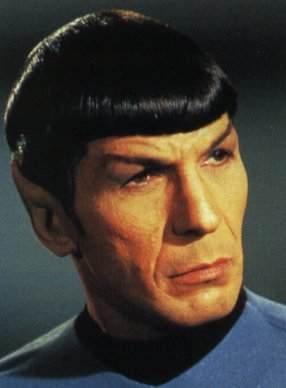
Although this isn't really new information to most savvy investors, it does help to clarify my thinking around this point - please refer to my more recent photograph below.

"The needs of the many outweigh the needs of the few" - Spock


JW

The Confused Capitalist

Monday, February 27, 2006

Planning for Emotional Control

We all have emotions - which is great in our personal lives, but doesn't help that much in our investment lives.

In fact, many great investors have stated that being in control of one's own emotions allows one to tread where others fear to go, and to fear to tread the well-worn path. What this means is that the best returns are generally earned when no one is considering that sector/company or timing (due to a recession, for instance), while returns earned when everyone is on the bandwagon, are typically only fair, and often poor.

Fidelity reportedly did an analysis on their then flagship "Magellan" mutual fund, and found that the average investor in the fund typically did much worse than the fund itself. Why? Timing, they found - investors piled more money in after a period of strong returns, and tended to pull more out after a period of weak returns.

So we as investors want to avoid the same fate. One way to do so is through planning. Make a plan to start the year and follow it. Write down what could cause you to want to deviate from that plan. Then when you are tempted to change your investment strategy, go and review your plan to see if you'd already predicted that could happen. For instance, bearing in mind my own plan for the year (see prior post) and my own personality, I considered that these items could possibly derail my attempts to follow my strategy:
  1. The volatility of my leveraged investments might worry me - so just ignore them and remember that volatility is the order of the day with this investment type;
  2. Ensure that I have enough money to continue to invest in my small cap stocks - I really enjoy investing in this area, and if I completely exited it, I know I'd get "itchy feet" with my other investments;
  3. Trust that the investments based on the "value screens" of others will produce worthwhile long-term results - just as they have in the past;
  4. Avoid excessive diversification, bearing in mind that superior investment results usually come from a focused portfolio.

If you read between the lines, you can see that a number of my reminders have to do with the characteristic of impatience. If I can control that within myself, this will personally make me a better investor.

The point here is that we all have our weak points, and if we recognize them, write them down, they hold less power over us. Your weak point as an investor might be the same as mine, or it might be different. As Sun Tzu is reported to have said in The Art of War:

If you know neither the enemy nor yourself, you will lose every battle, if you know yourself or the enemy you may win some battles and lose some, but if you know both yourself and the enemy, you will win every battle.

At least improve your investment "battle" chances by knowing yourself.


JW

The Confused Capitalist


Thursday, February 23, 2006

Fear is Your Friend: Embrace It!

The other day I entitled an article “Fear: an Investors Biggest Friend & Worst Enemy” and it occurred to me that I’d said why it was an enemy, but didn’t say why it was a friend. The reason is, if you learn to use your fear – which generally occurs after an extended market decline – as a contra-indicator.

In other words, you recognize the fear, but also recognize that a market decline generally represents an excellent opportunity to increase your long-term rate of return. I’d read that an analysis determined that if you added 10% to your stock portfolio after every 20% market decline (an opportunity that admittedly doesn’t happen very often), that you would increase your overall rate of return by 2% annually.

While 2% doesn’t sound like a lot, it has large implications over a long investment horizon. For instance, if you think your return rate is likely to mirror the long-term average of the stock market (large stocks: 10% or so), then increasing your return by 2% annually means this over a 25 year period:

Instead of a $100,000 portfolio being worth under $1.1 million in 25 years, it is instead worth over $1.7 million. What a huge difference when using fear to your advantage.

So this is how to turn fear to your advantage – by using the Warren Buffett saying … “We seek to be greedy when others are fearful, and fearful when others are greedy.”

Fear – your best friend.


JW

The Confused Capitalist

Tuesday, February 21, 2006

Fear: An Investors Biggest Friend & Worst Enemy

Although I've laid out a very conservative and creditable plan for using leverage (see the Leverage Series, just completed) to help an older couple with poor retirement prospects significantly improve their future, many people will see the same plan and completely pass it by.

Why? The reason is usually fear. However, many people won't admit to that; they'll talk about the market at a peak (although they might know very little about the market), or use some other justification to avoid changing their situation. Many great investors have said that managing one's own emotions is the largest hurdle to becoming a successful long-term investor.

In this way, you can avoid selling when "the market" has declined in value (and in fact look to BUY at that time), and not panic and sell your own investments (or "rebalance" from a position of emotional weaknesses) during a market downturn. Managing your own emotions also allows you to avoid chasing a hot market or sector, as many people did (like I did, too!) during the NASDAQ rocket ride in 1999 - only to be shortly followed by the crash thereafter.

Being emotionally balanced and remaining committed to the long-term, despite the markets burps and belches, is the best way to have the success in the long run.

JW

The Confused Capitalist