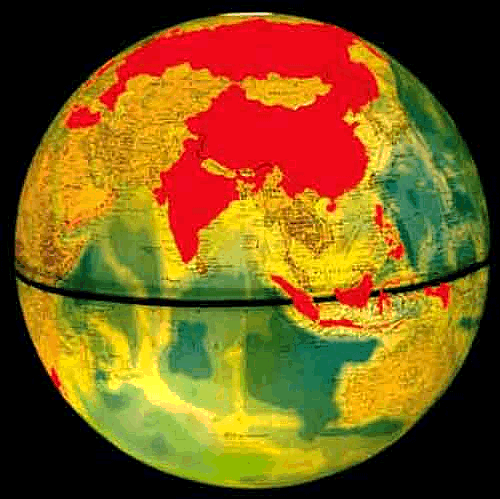
I have written a great many times (e.g. 1, 2, 3, 4 or all, 5) since this blog started over four years ago, about the need for any forward-looking, growth-oriented investor to have a very serious weighting in emerging markets. A recent article in the Financial Post, highlighting information from Goldman Sachs Global Economics Paper No. 204, makes the point worth repeating, once again.
They point out that the emerging markets now total some 31% of the global stock market capitalization, and suggest that this will expand to 55% by 2030. Is that shocking? Hardly. According to the OECD, a global club of rich countries, emerging markets already have 49% of the global GDP, on a purchasing power parity basis; and they appear slated to continue growing rapidly. Is it a surprise to think that their stock market valuations are slated to follow their growth?
What is shocking, is that against that, Goldman Sachs estimates that developed market investment funds hold just 6% in emerging market equities, out of their total equity allocation. They believe this will rise to 18%, by 2030. In other words, if you are a typical rich country investor, a peek behind the curtain of investments that YOUR investment advisor has gotten you into, would reveal that you are sitting at just 20% the emerging market exposure you should be at, assuming you simply want to mirror the world economic powers (e.g. 6% divided by 31% = 20% exposure). By 2030, the situation gets somewhat better, but your exposure would still be wildly low, compared either to world GDP then, or emerging market stock market capitalizations.
If you wanted to simply mirror global market returns going forward, then seriously underweighting one of the two most easily visible growth investment themes going forward sure isn't the way to do it. If you wanted outsized returns, then you'd likely seek even more participation in rapidly growing economies, assuming you have decent entry points, e.g. valuations not stretched. (Are they currently too high? Not in my book. They are trading at an average PE ratio of just 12, according to the Financial Times, which compares to a PE on the S&P 500 of 14.7).
The other thing to know here, is that the emerging markets are no longer the wild west. They have solid economic principles they are managing their economies on, and populations of great savers (oh, if only the western world were so lucky now!). This makes it pretty easy to suggest that their stock market volatility is going to continue to move down, especially compared to the overleveraged and overspent rich countries.
If you are a growth investor, go wake up your investment advisor, and demand he or she explain exactly why your emerging market exposure is so darn limited.
Disclosure: Participant in the emerging markets theme via DEM, DGS.
On a blog aggregator? Go here, The Confused Capitalist, for additional content and our growing focus on climate change investment strategy.